


Cart
0
You may also like



For years, I’ve been that person who walks past the "superfood" aisle in the health store with a skeptical look on my face. You know the section—the one with the overpriced powders, the jars of things that look like sawdust, and the supplements that promise to turn you into a superhuman by next Tuesday. I’ve wasted more money than I care to admit on fancy jars of stuff that ended up at the back of my pantry, gathering dust until I eventually threw them out.
So, when my friend first shoved a jar of Beehive Pollen into my hands a few months ago, I was ready to be disappointed. "Just try it," she said. "It’s basically what keeps the hive going."
I looked at the jar. It was filled with these tiny, vibrant, multicolored granules—bright yellows, deep oranges, even some hints of dark red. It looked... well, it looked like nature. I took a hesitant taste. It wasn’t a sugar bomb like honey, and it wasn’t bitter like some herbal tea. It was earthy, slightly floral, and had a strange, satisfying crunch.
Fast forward to today, and that jar from Honey Hut is now a permanent fixture on my kitchen counter. I’m not saying it’s a miracle cure, but it’s become one of those simple, honest additions to my life that actually makes me feel like I’m fueling my body the right way.
Let’s be honest: the idea of eating bee pollen sounds a little bit out there. We’re used to honey—it’s sweet, it’s comforting, it goes in tea. But pollen? It feels a little more primal. But when you think about what it actually is, it starts to make sense.
Think about a bee. It spends its entire life traveling from flower to flower. It’s not just picking up nectar; it’s covered in these microscopic grains of pollen. The bees are incredibly clever—they mix that pollen with a little bit of their own nectar and enzymes to create these perfect, nutrient-dense pellets. It’s how they feed the hive. It’s the energy source for the entire colony.
When I started reading up on honey bee pollen, I was surprised to find that people have been using this stuff for centuries. It’s not a new "internet hack." It’s a foundational piece of a natural diet. People often talk about forever bee pollen as a way to describe how much life force is packed into those tiny granules. Whether that’s scientific or just romantic, I get why they say it. When you’re eating something that is so concentrated and so raw, it feels like you’re actually getting the benefit of all those flowers the bees visited.
The reason I’m so vocal about Honey Hut isn’t because I’m trying to sell you something. It’s because I’ve tried the cheaper, mass-produced pollen you can find at big-box stores, and the difference is night and day.
When you buy cheap, processed pollen, it’s often been heated to such high temperatures that all the "good stuff"—the enzymes, the delicate vitamins, the living energy—is basically cooked out of it. It ends up tasting like cardboard. But the stuff from Honey Hut? It feels alive. You can see the variation in the colors, which tells me it’s coming from a diverse range of flowers, not just one single, monoculture field.
It’s just real, honest food. In a world where we’re constantly being marketed "processed wellness," finding something that feels this raw is actually a huge relief.
I think the reason I’ve actually kept up with this habit is that it’s incredibly easy. I’m not a morning person. If a health habit takes more than thirty seconds or requires a blender I have to clean, I’m probably not going to do it.
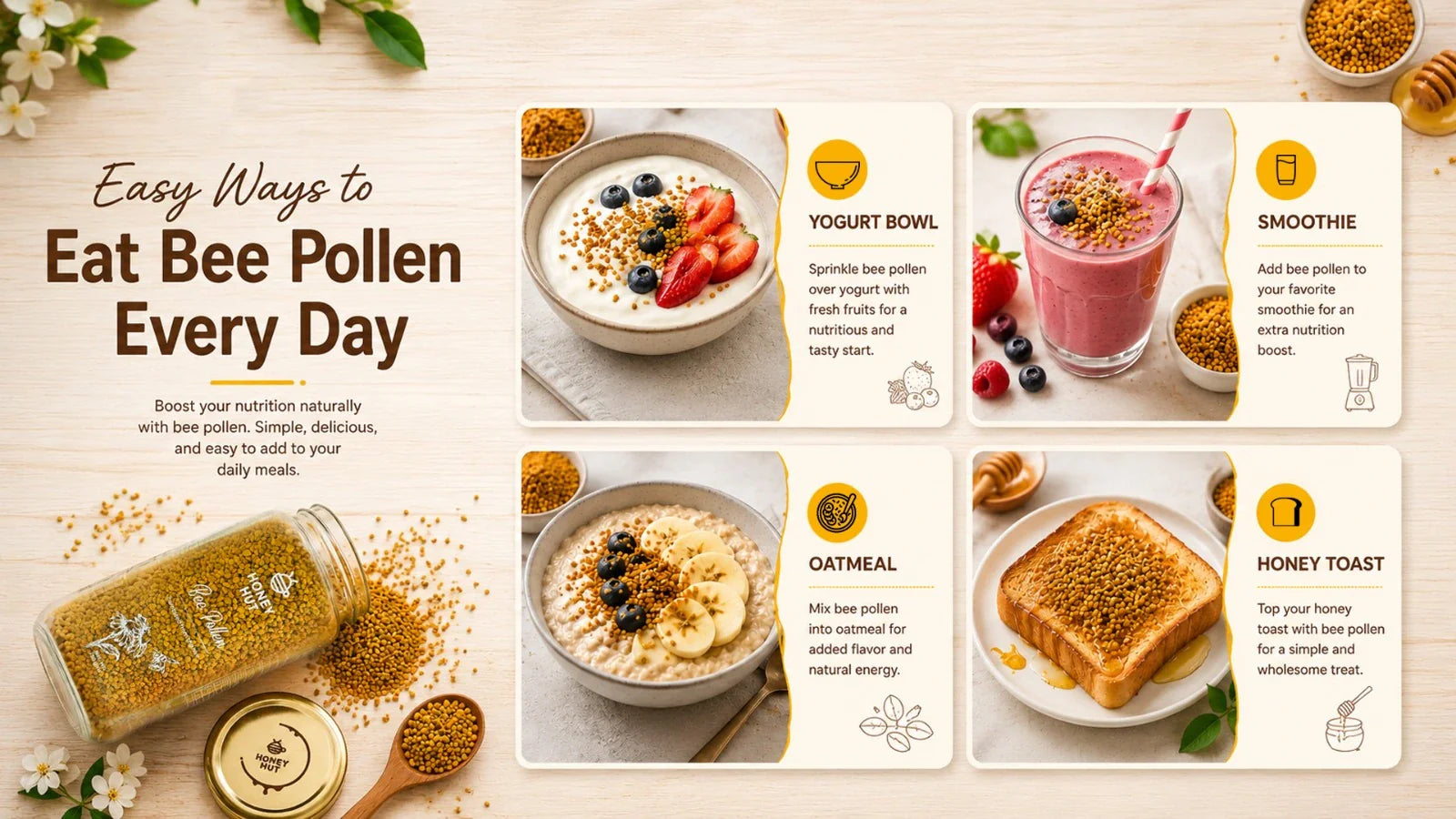
My routine is stupidly simple. I have a bowl of plain Greek yogurt. I add a handful of berries, maybe a drizzle of raw honey, and then a generous teaspoon of bee pollen. That’s it. It’s not a "recipe." It’s just breakfast. But the texture? That crunch from the pollen makes the whole bowl feel like something you’d get at a cafe, not something I threw together while still half-asleep.
Sometimes, if I’m having a rough afternoon and I’m staring at my computer screen with that "I need a nap" feeling, I’ll just eat a small spoonful of it straight. It grounds me. It’s a little reminder to step away from the blue light and just eat something real.
I see a lot of blogs out there claiming that Beehive Pollen will cure every ailment from headaches to lack of sleep. I’m not going to tell you that. What I will tell you is how it makes me feel.
Since I started, I’ve just felt more consistent. I don't get that wild spike of energy followed by a massive crash like I do with a third cup of coffee. It’s more like a steady, quiet hum of energy. And maybe it’s just the placebo effect, or maybe it’s the fact that I’m actually getting antioxidants and amino acids in a way my body recognizes, but I feel better prepared to handle the day.
It’s also surprisingly rich in protein and trace minerals. For someone like me who sometimes eats on the go, it’s a nice little "nutritional insurance policy."
1. "Wait, you're eating pollen? Will it make me sneeze?"
I promise, I had the same fear! Eating it is completely different from inhaling it when it’s floating around in the air in the springtime. That said, if you have a known, severe allergy to bee stings, please talk to a doctor before you try it. It’s just not worth the risk. For everyone else, start with just one or two granules. If you feel fine, move up to a teaspoon. It’s always better to be cautious.
2. "Does it taste like medicine?"
Not at all. It’s actually surprisingly delicious. It’s mild, floral, and slightly nutty. If you like honey, you’ll probably find the taste of pollen to be really pleasant. It’s more about the texture for me—that slight crunch is what I crave.
3. How long does a jar last?
A decent amount of time! You really don’t need much. A single teaspoon goes a long way. I keep mine in a cool, dark cupboard. Some people put it in the fridge to keep it "super" fresh, which I’ve done, and it stays perfectly crunchy. Just make sure you keep the lid tight so it doesn't get damp.
4. "Why should I care about Honey Hut specifically?"
I’ve been down the rabbit hole of cheap grocery store supplements, and the difference is honestly shocking. When you support a brand that cares about how the bees are treated and how the pollen is harvested, you’re getting a product that hasn’t been ruined by industrial processing.

Written by
Ritesh Pandey is an experienced content strategist and writer with over 8 years of expertise in creating high-quality digital content across various industries. Over the last 3 years, he has focused extensively on the food and beverage sector, developing insightful content on honey, natural ingredients, nutrition, healthy eating, and consumer wellness trends. Known for his research-driven approach and engaging writing style.





